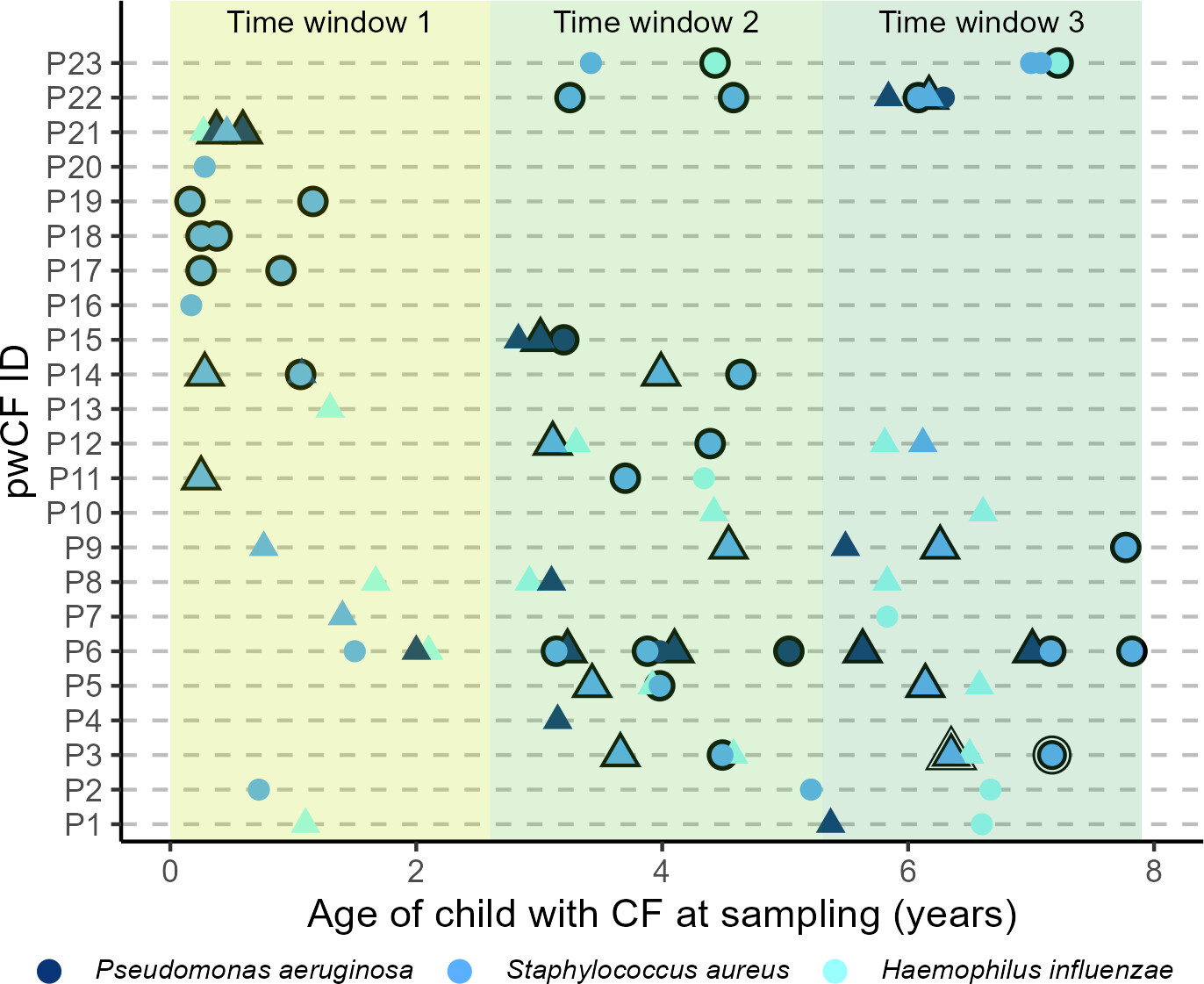
Bacteria colonising the airways of children with cystic fibrosis interact with both their host and one another. In a study published in Microbiology Spectrum, researchers from DQBM’s Kümmerli Lab and collaborators analysed 84 bacterial isolates from throat swabs collected from 23 children, combining genome sequencing with laboratory experiments.
The team found evidence of both bacterial strain replacement and persistence. Pseudomonas aeruginosa isolates from older children frequently carried mutations affecting bacterial communication. These isolates produced fewer protein-degrading enzymes and inhibited Staphylococcus aureus and Haemophilus influenzae less strongly in laboratory assays.
The findings highlight changing relationships between pathogens during early childhood. They provide a basis for investigating how microbial interactions influence cystic fibrosis, while throat samples and laboratory assays cannot fully capture conditions in the lungs.