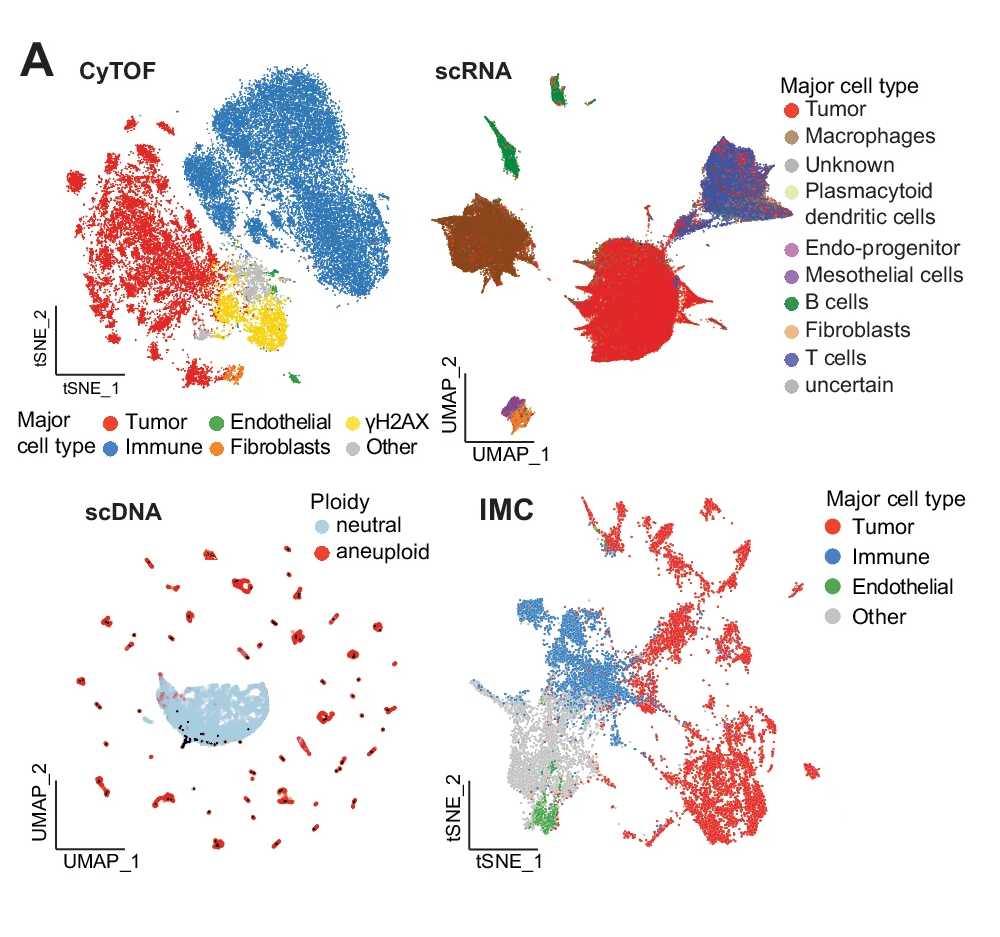
How cells are arranged within a tumour can reveal information about disease progression. Researchers involving DQBM’s Bodenmiller Lab, Heidelberg University and international collaborators developed SpaCEy to analyse these spatial patterns alongside protein measurements from individual cells.
SpaCEy represents tissue as a network of neighbouring cells, without requiring predefined cell-type labels. Applied to lung and breast cancer datasets, it identified patterns associated with disease progression and distinguished patient groups with different overall survival, including within established breast cancer subtypes.
An integrated explanation method highlights the connected tissue regions and protein markers most relevant to each prediction. This makes SpaCEy a tool for investigating how tissue organisation relates to cancer outcomes and generating hypotheses for further research.
Read the publication in Nature Communications