Homeostatic cytokines of the common gamma chain family are key to lymphocyte development and maintain stable T cells counts during steady-state and following immune responses. Interleukin (IL)-7 and IL-15 are essential for homeostatic proliferation of naïve CD4+ and CD8+ T cells, whereas IL-2 is crucial for the homeostasis of regulatory T cells. Sensing of these cytokines is mediated by dynamic expression of their corresponding receptor subunits.
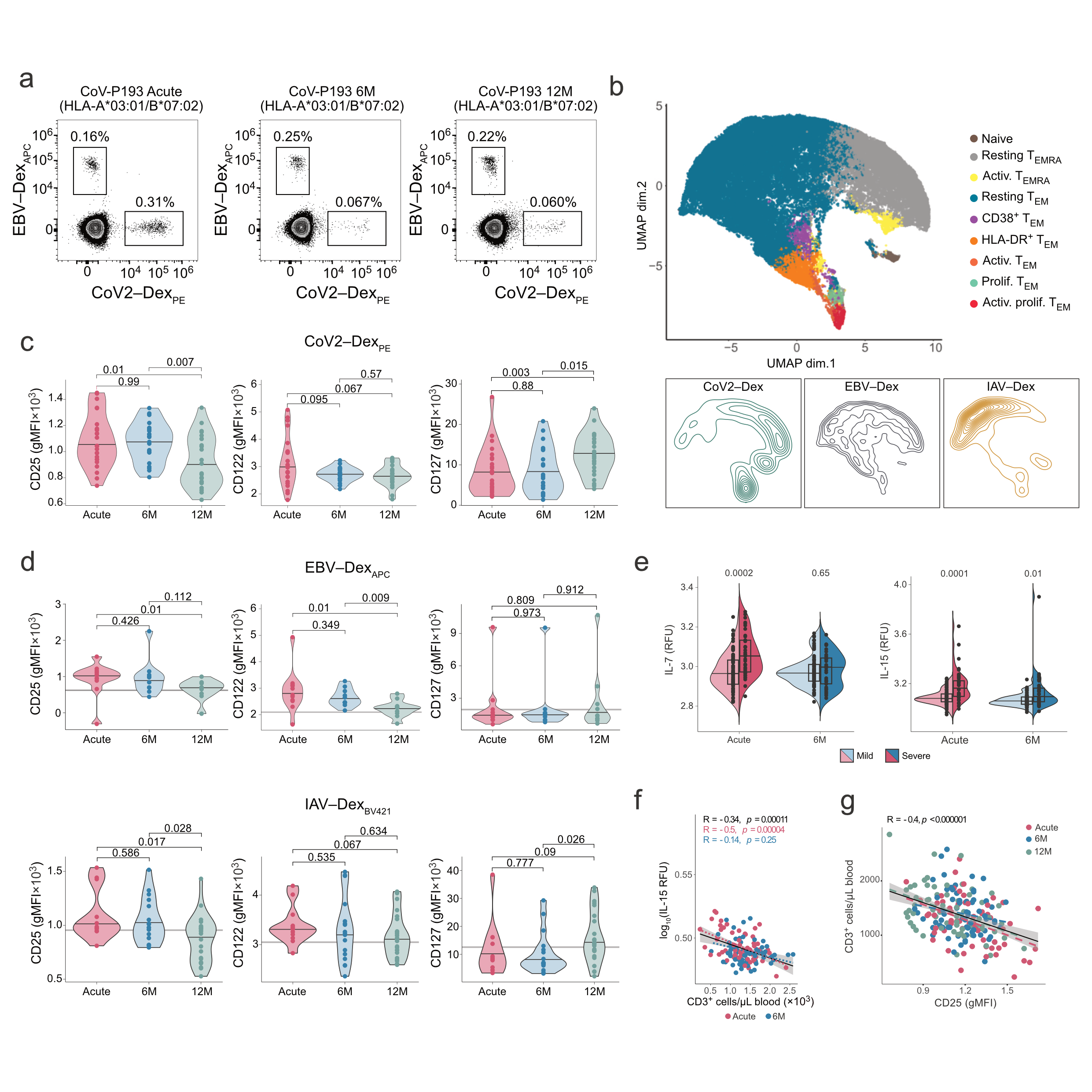
A new study from the Boyman Lab at DQBM now demonstrates that dysregulation of these homeostatic cytokine receptors following acute viral infection in humans persists for far longer than previously assumed. By performing a detailed analysis of T cell homeostasis following severe acute respiratory syndrome coronavirus-2 (SARS-CoV-2) infection, vaccination and IL-2 immunotherapy, the study reveals persistent activation and dyshomeostasis of T cells for 6–12 months after acute infection. These alterations occur not only in virus‑specific T cells, but also in bystander T cells, suggesting cytokine signaling as a driver of this phenotype.
These findings suggest that dysregulated homeostatic cytokine signaling may drive prolonged immune activation well beyond the acute phase of infection, even in recovered patients. This may lead to persistent low-grade inflammation despite apparent clinical recovery that might predispose individuals for post-viral immune pathologies or infection-associated autoimmunity.
Read the full publication: https://doi.org/10.1038/s41467-025-66753-1